
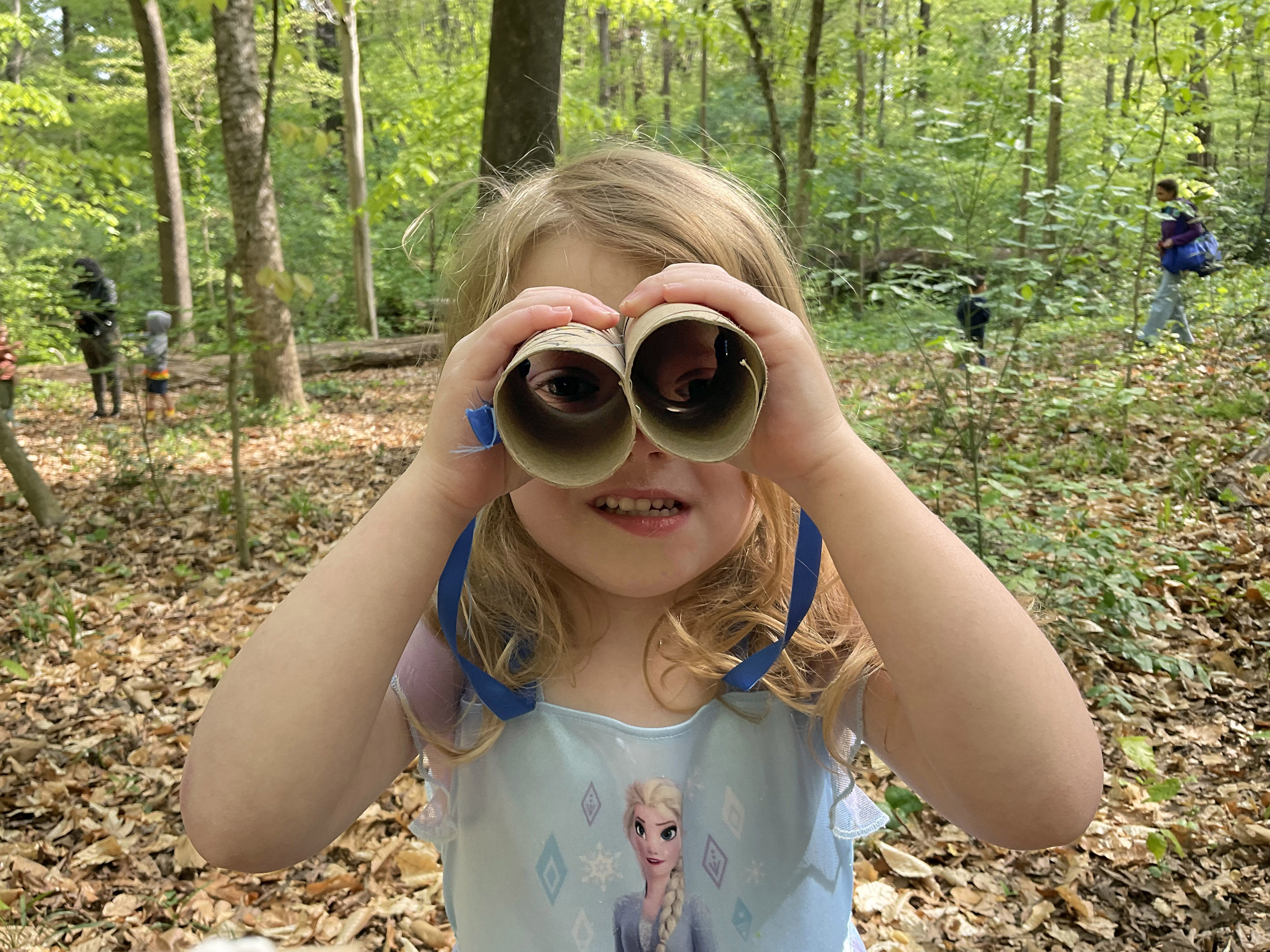
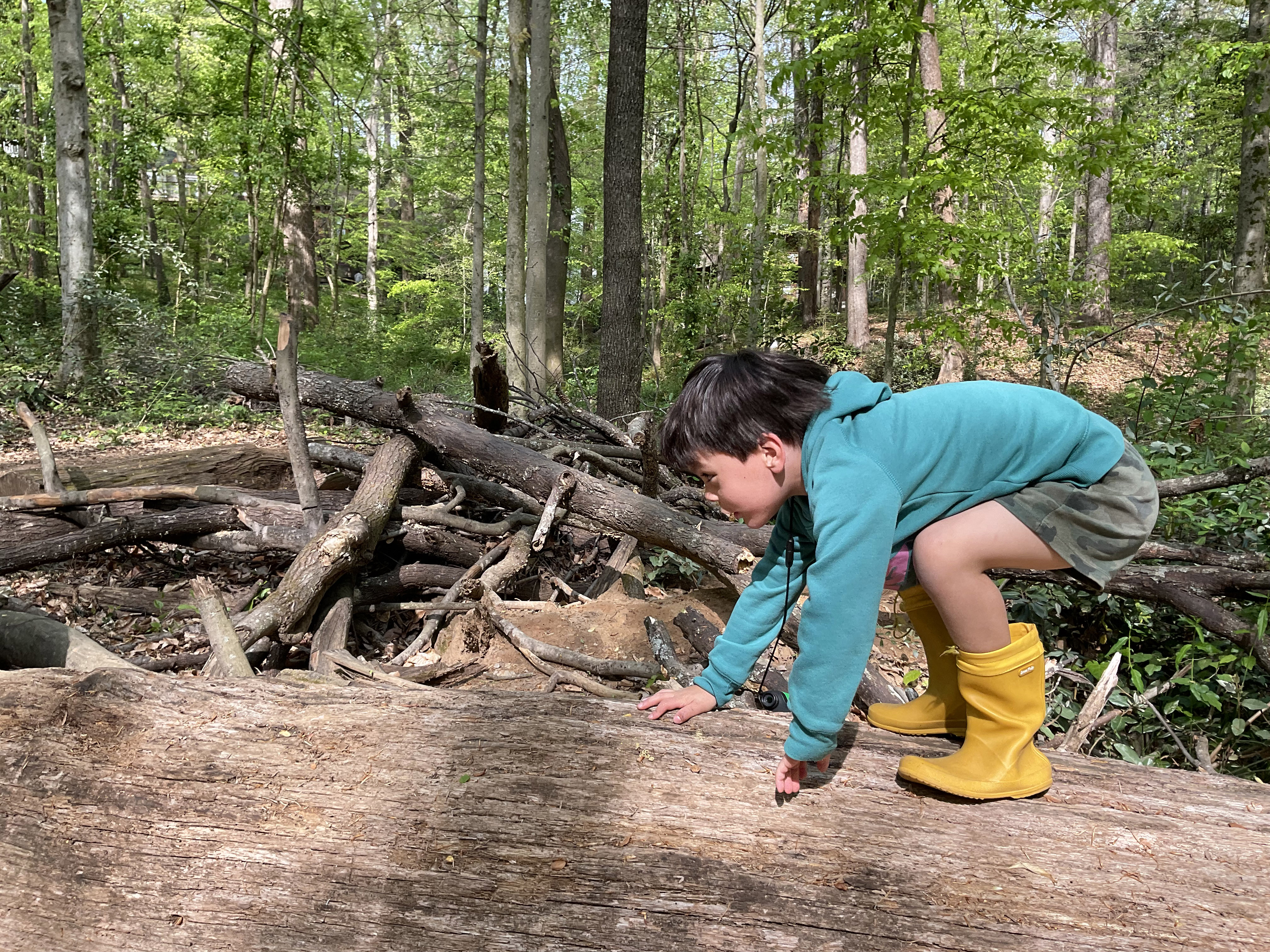
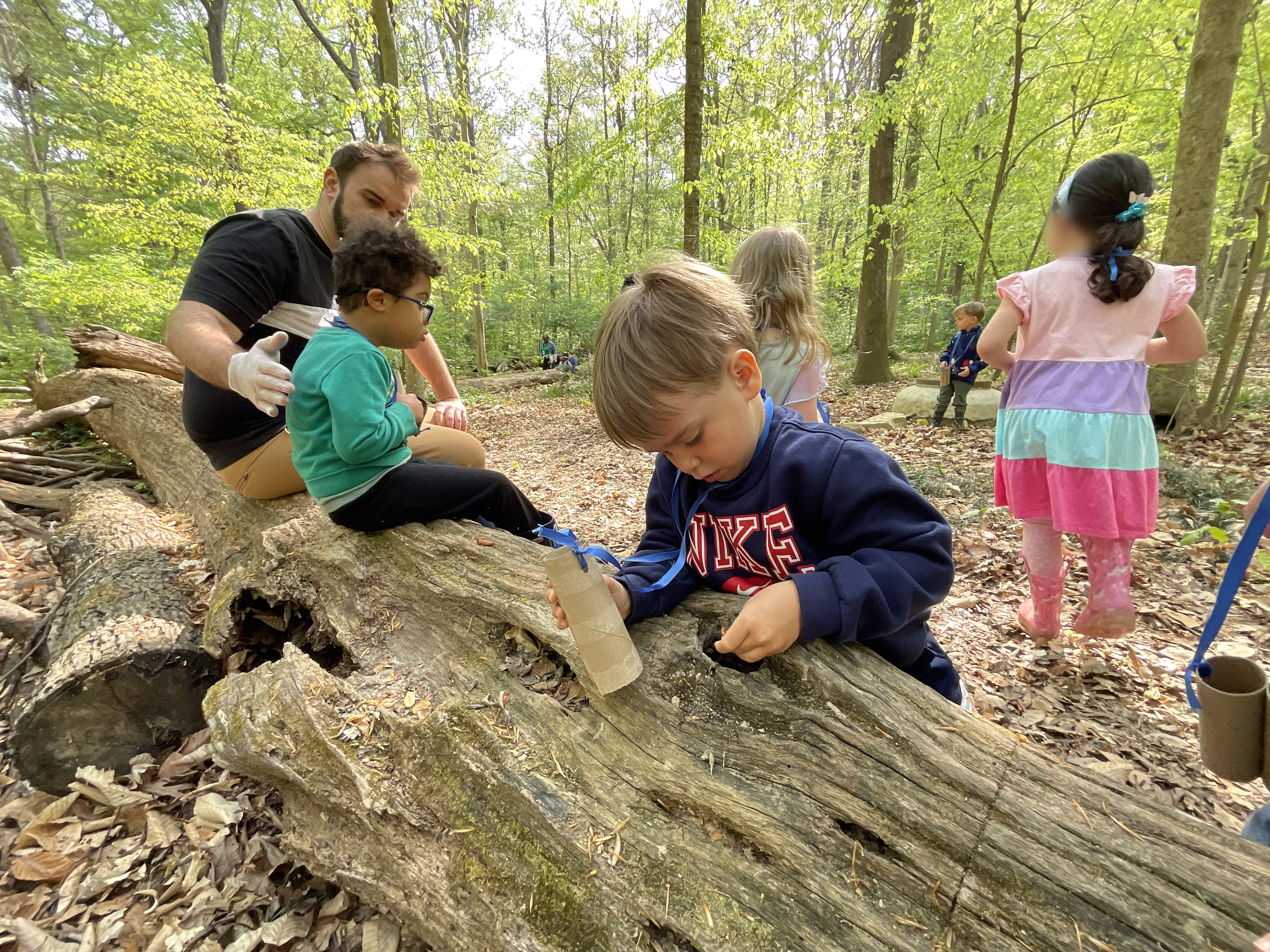
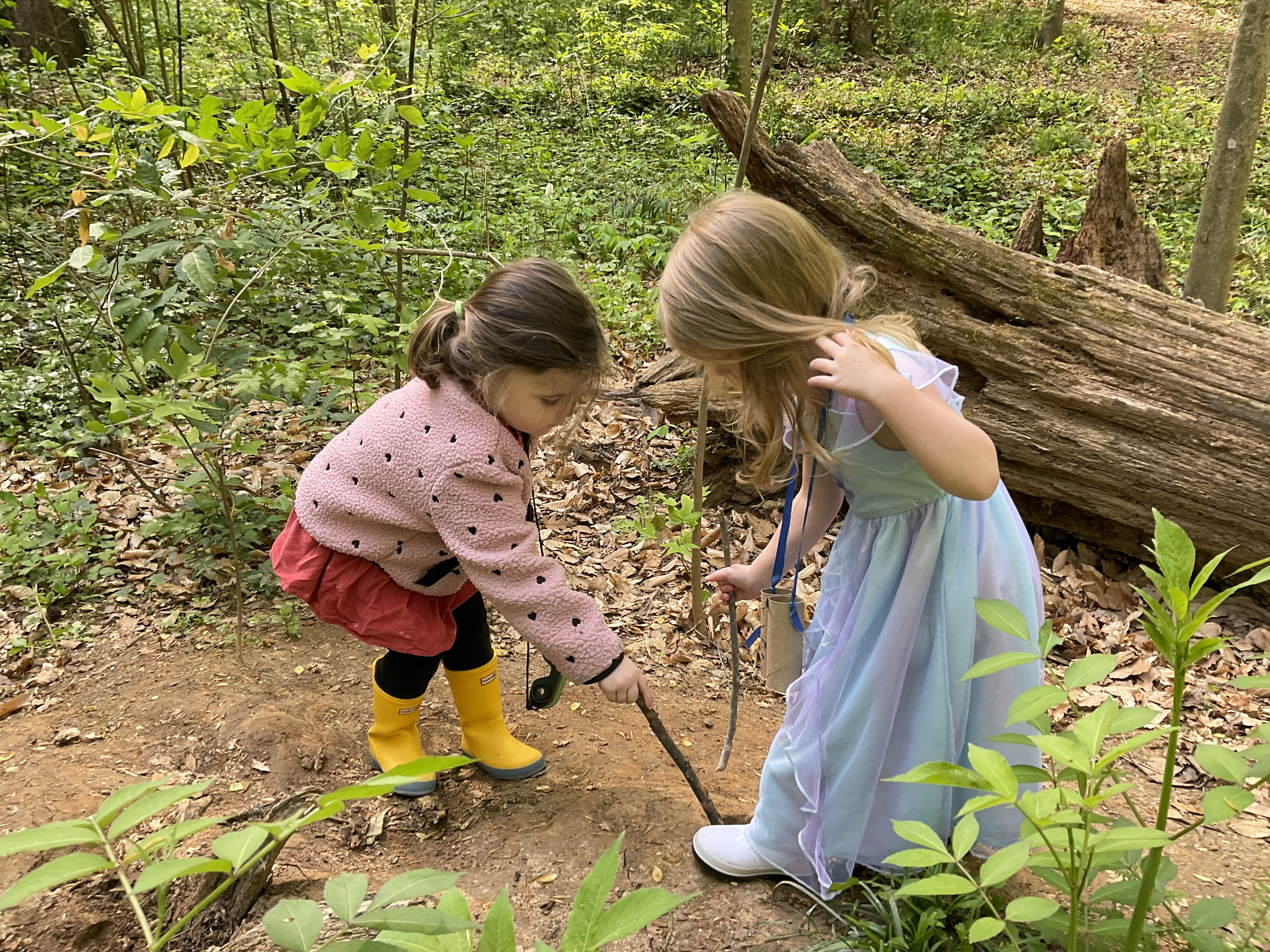
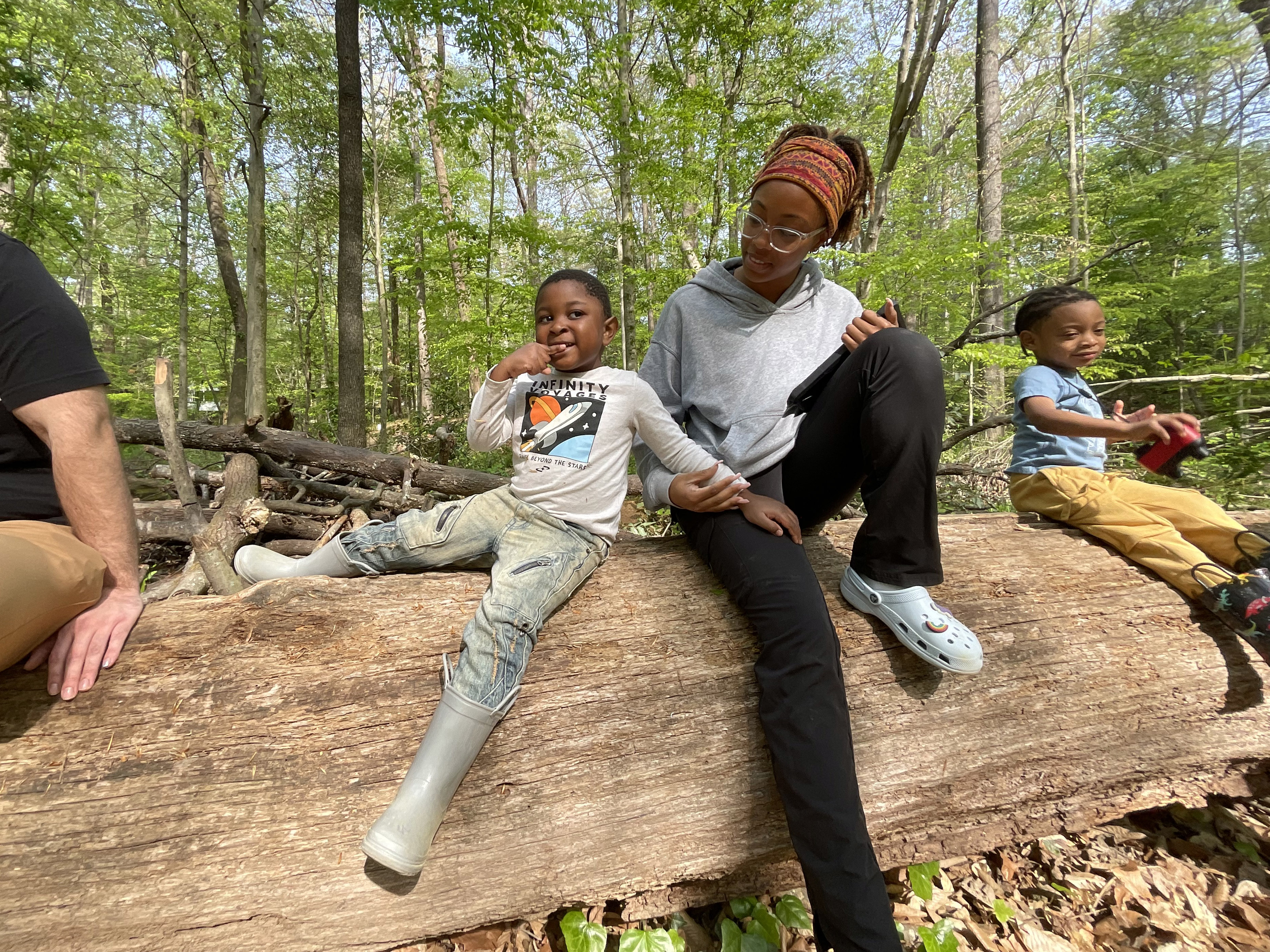
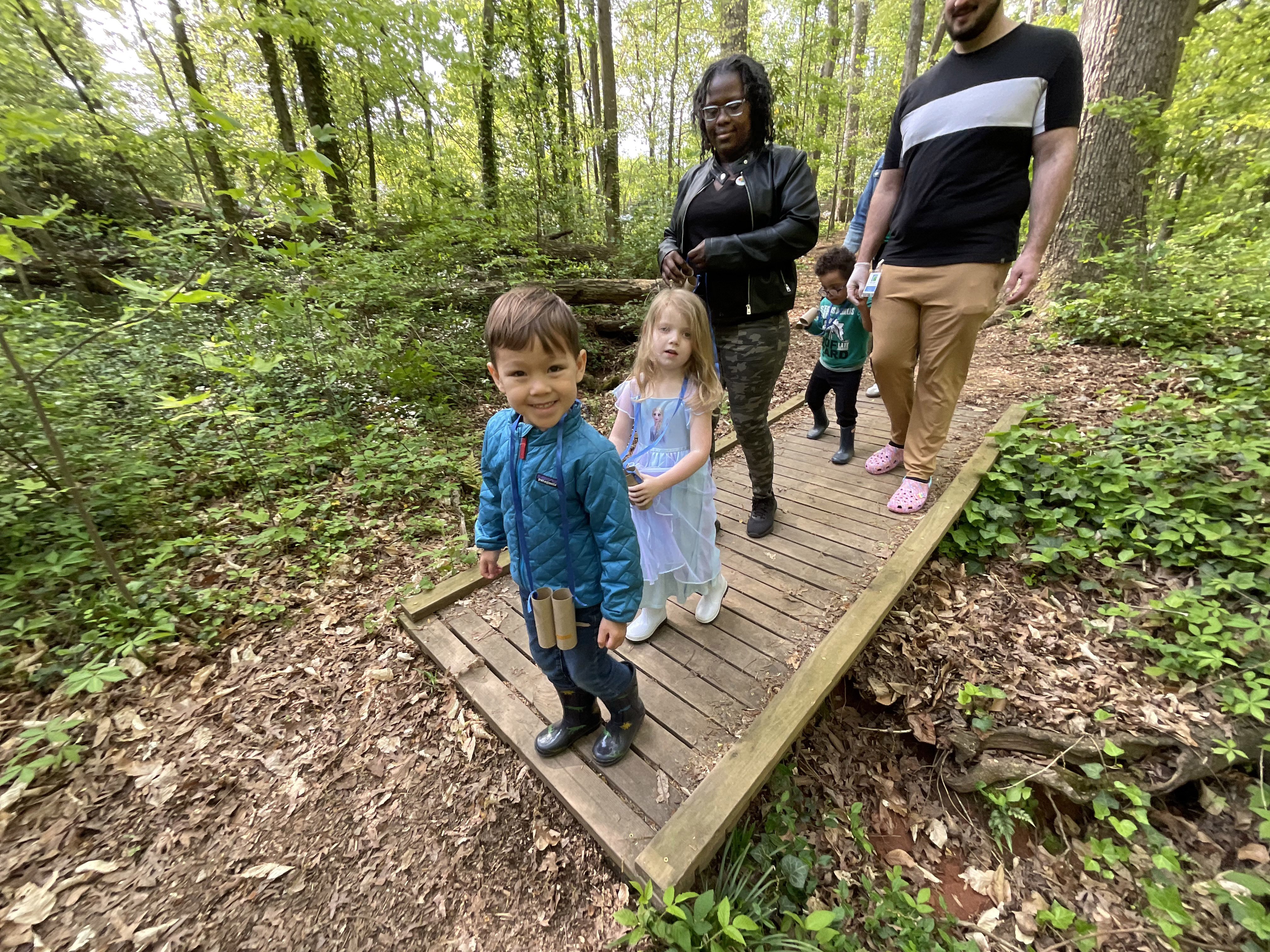
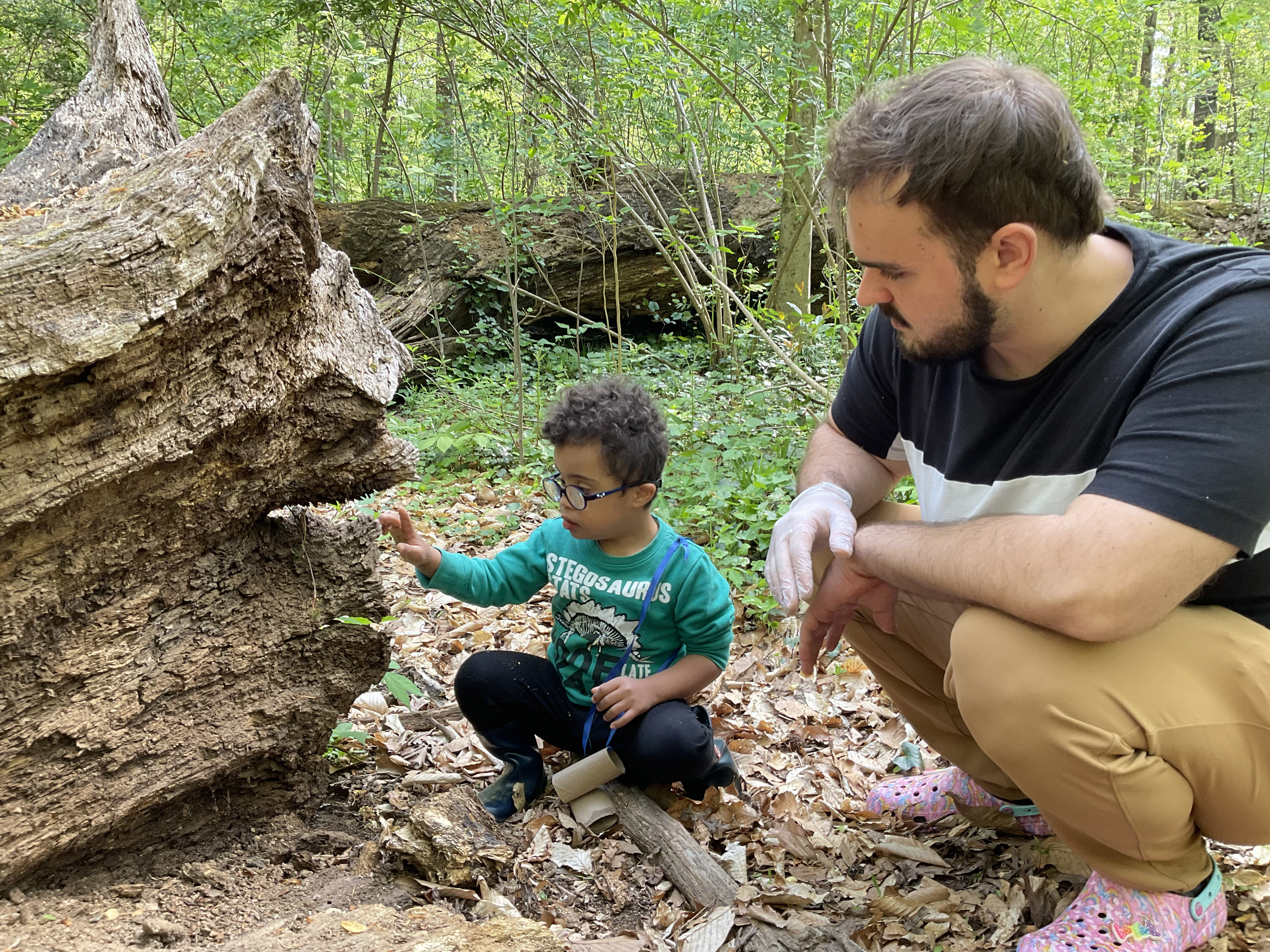
If you walk into Frazer Forest on a weekday morning, you won’t see a formal lesson starting. You’ll see children already at work.
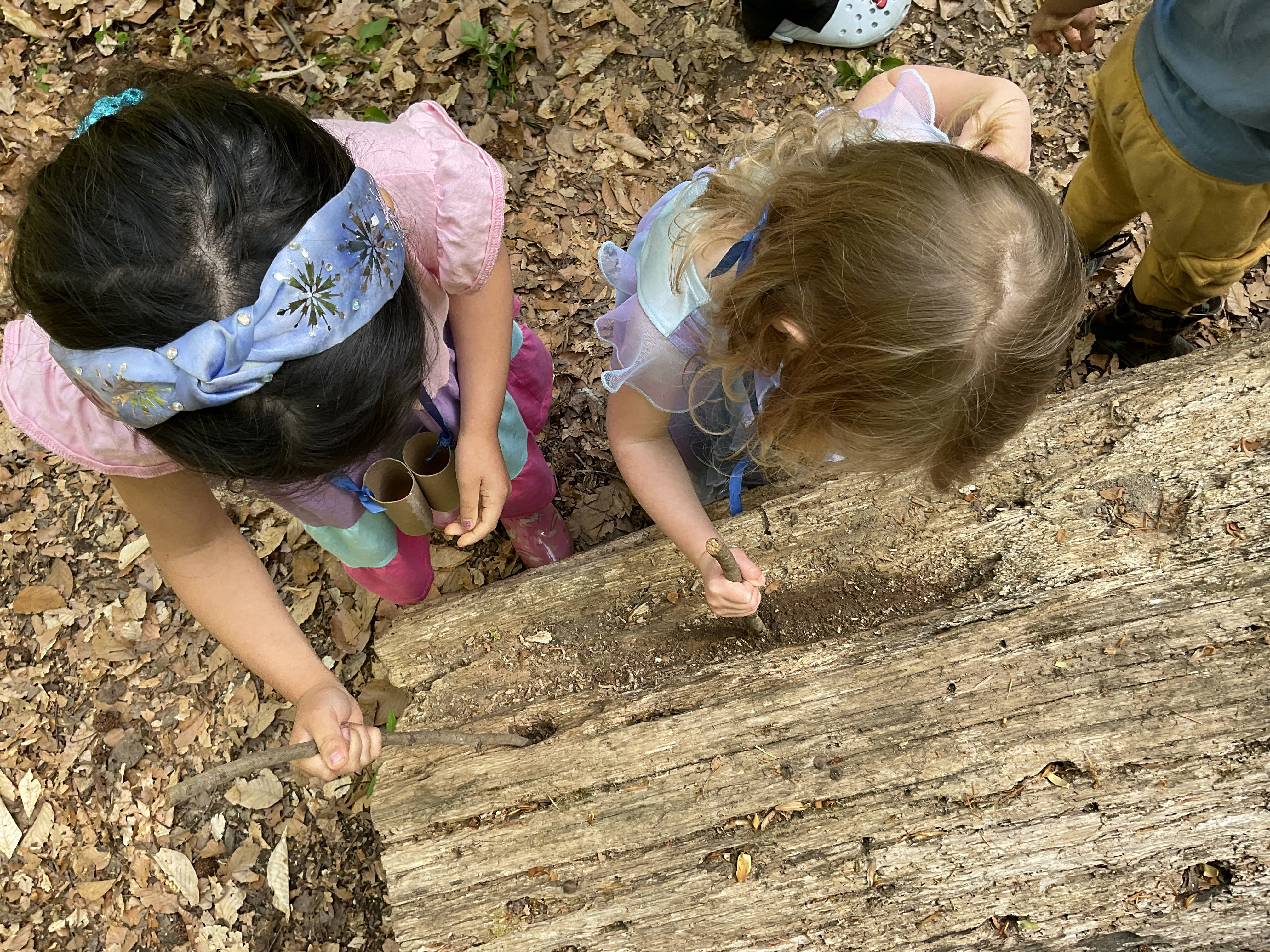
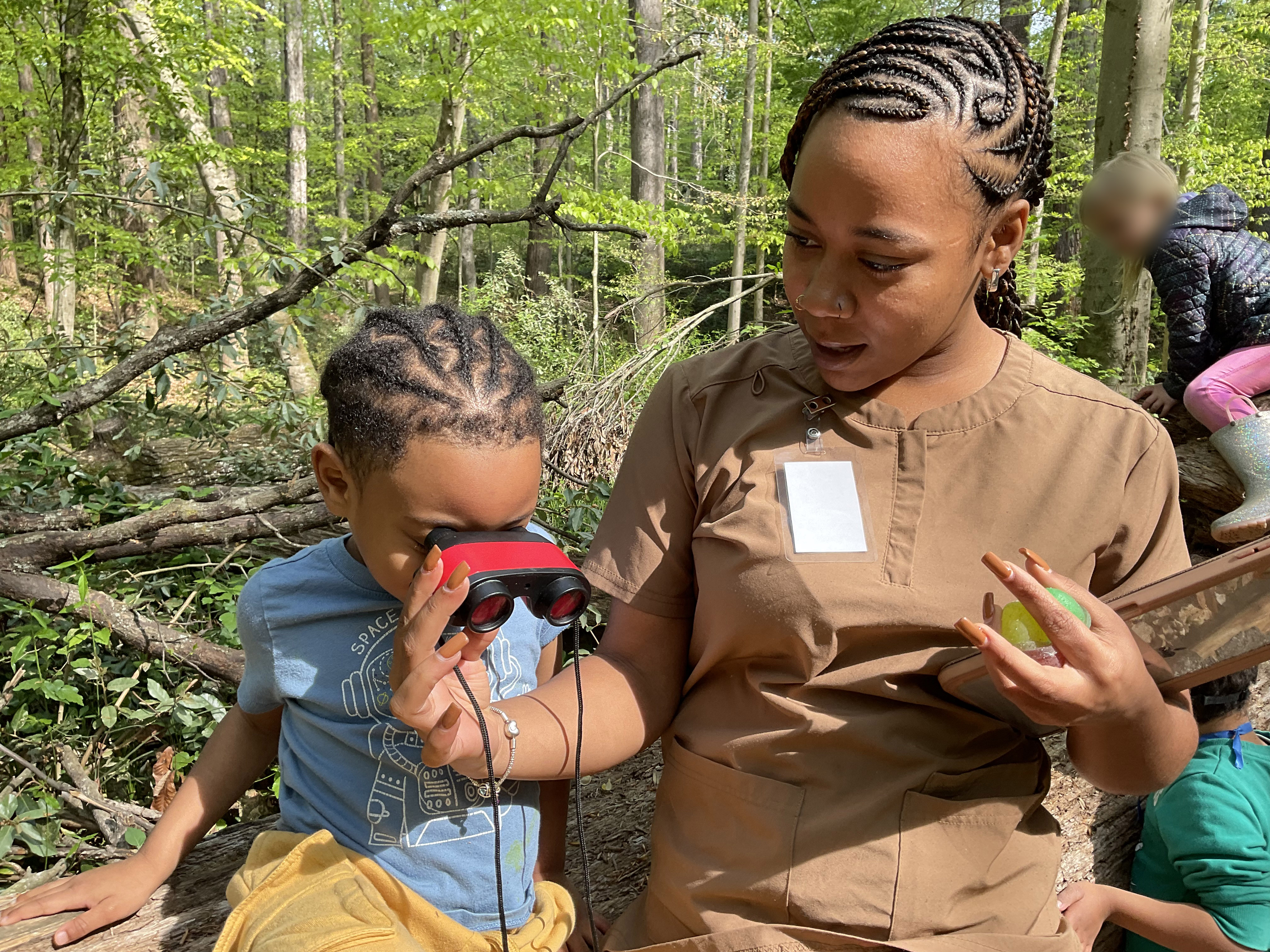
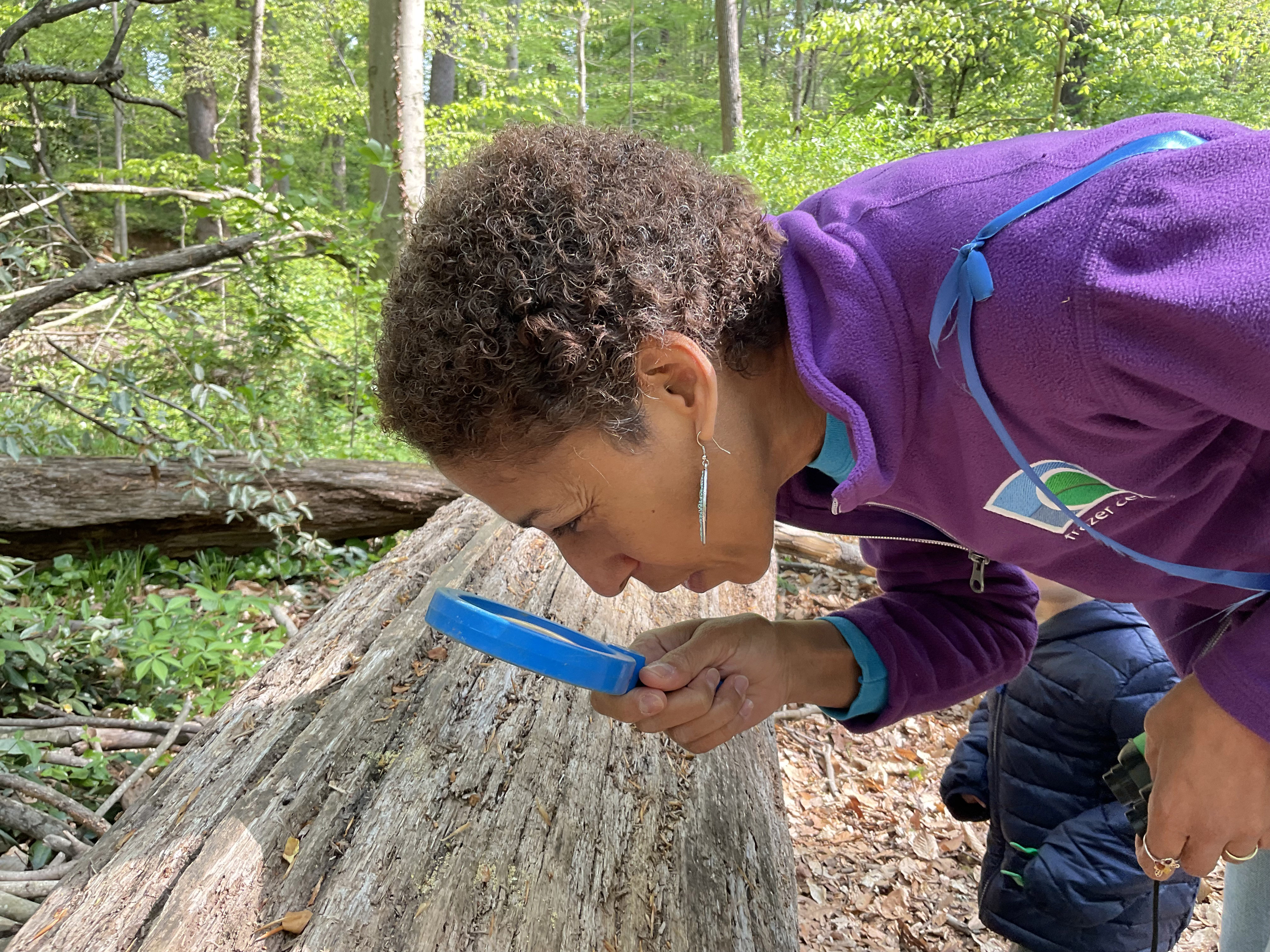
A group might be gathered around a fallen log, stirring “soup” in a pocket of rainwater. Someone else is crouched low, using a magnifying glass to study a bug. A few children are hauling sticks, turning them into tools or props for whatever game is unfolding. Teachers move alongside them, asking questions, noticing what the children notice.
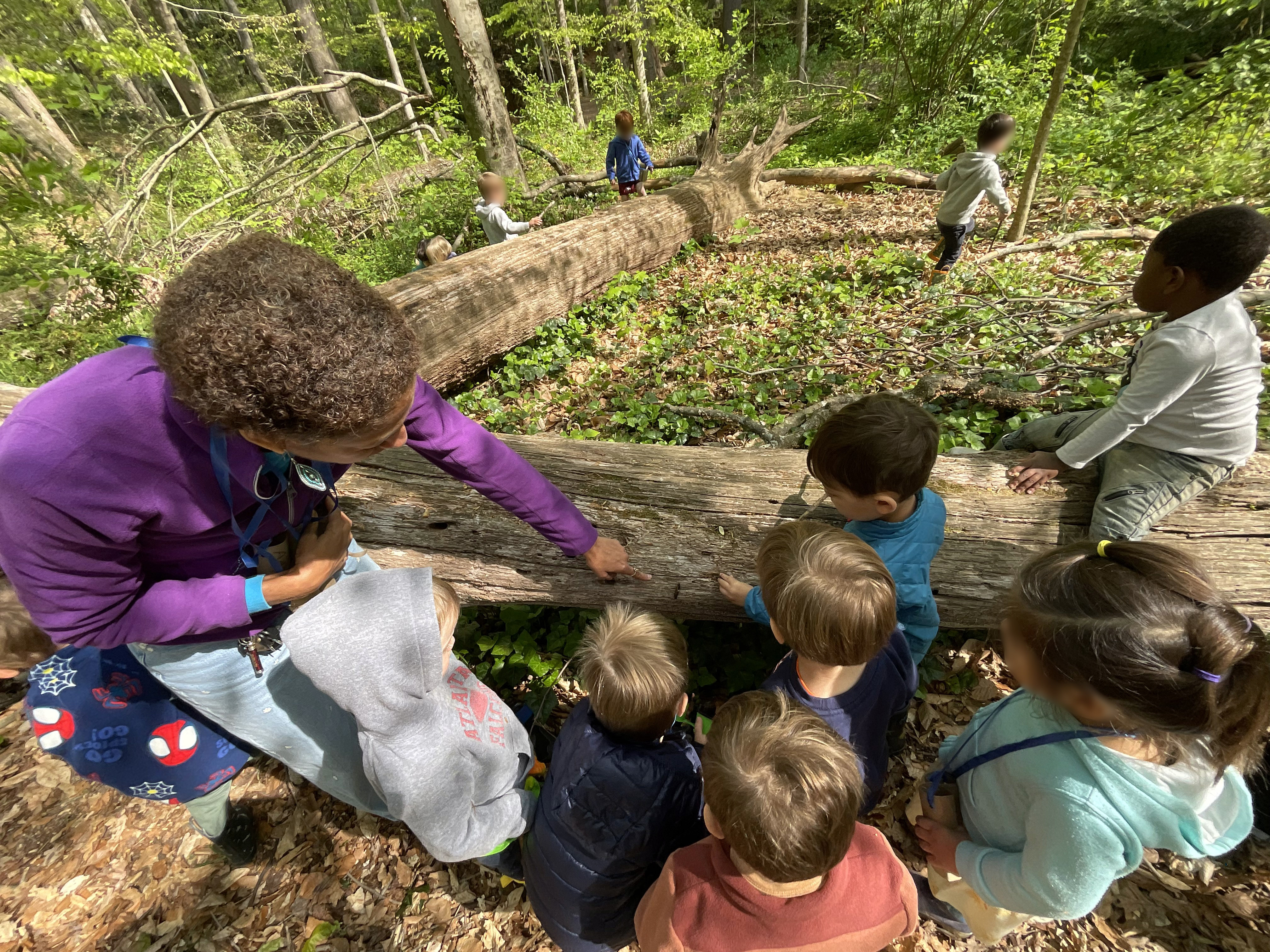
On a recent morning, a teacher pointed out a bright yellow clump on a log. It looked like a fungus. The group paused. There were a few quiet “oohs,” a closer look, and then a round of guesses about what it might be.
Moments like that happen all the time. Not planned. Not scripted. Just something worth paying attention to.
Small moments that stay with them
One child recently built what she called a “bug home” on a piece of bark. She gathered moss, small plants, and pebbles, arranging them carefully. When she found a roly poly, she placed it inside.
“This is my home for the roly poly,” she said.
She wasn’t asked to do it. No one suggested it. She wanted to create a place that felt safe for something small and easy to overlook.
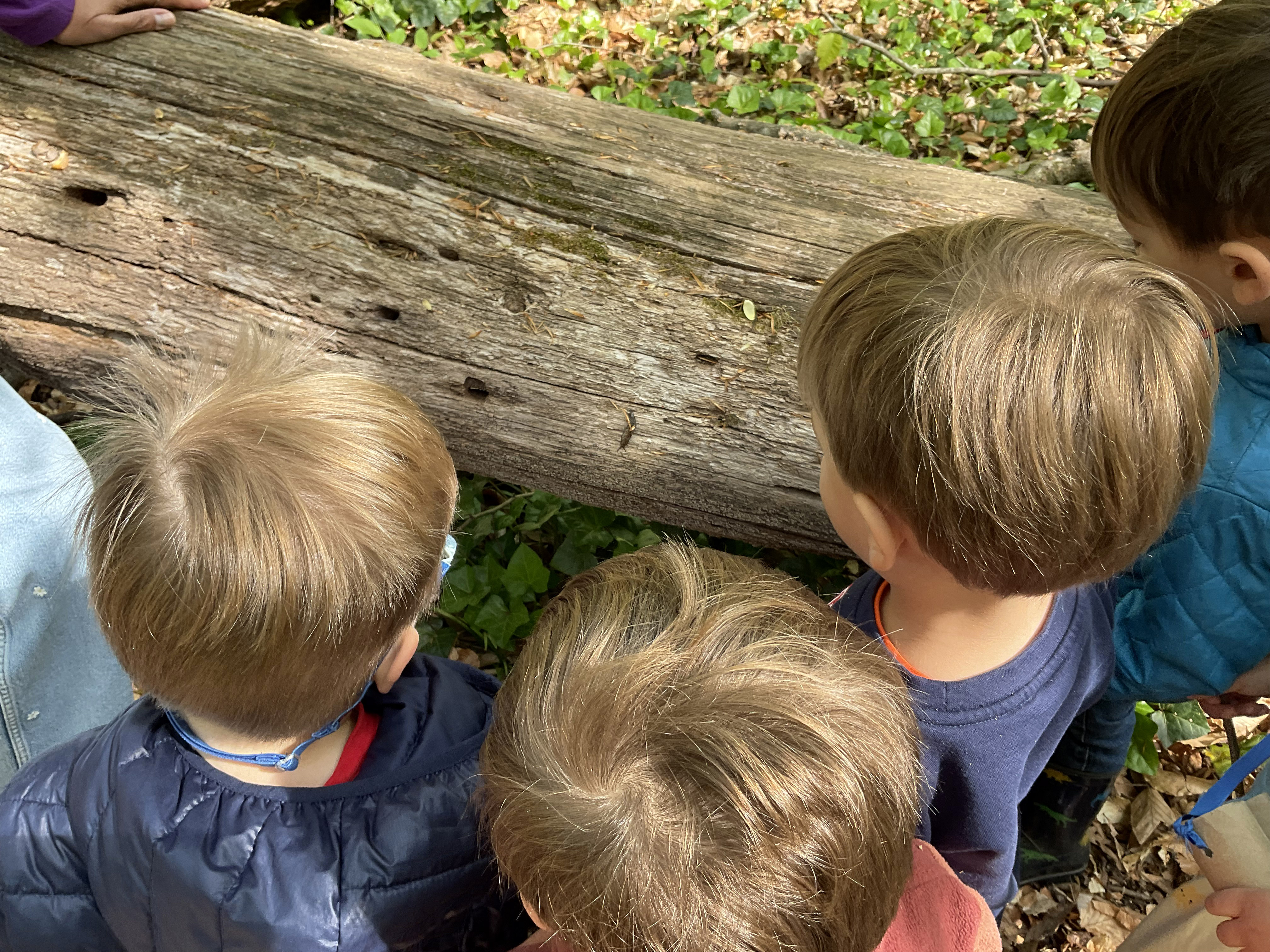
In another moment, a group of children spotted a slug stretched along a log. They circled around it, watching closely. Where was it going? Why was it moving so slowly? No one rushed them along. They stayed with it.
Not every moment is gentle. One day, a child knocked a caterpillar off a leaf. It became a different kind of lesson. Why does it matter? What does a caterpillar need to survive? Why do we leave things where we find them?
Those moments carry just as much weight.
Learning by being there
Some things are hard to explain inside a classroom.
You can talk about wind. You can describe it. But outside, children see what it does. They watch leaves move, notice how birds glide, feel the shift in the air. They start to connect it on their own.
The same goes for what lives in the forest. Salamander eggs tucked beneath rocks. Tiny flowers close to the ground. Moss and fungi growing in places adults might walk right past.
Because the children spend time there, they begin to notice more. And once they notice, they start to care.
Teachers hear it in small ways.
A child pointing to a worm and explaining, “It helps the earth breathe.”
Another stopping at the edge of the creek: “That’s trash. That doesn’t belong in the water.”
It’s not a memorized lesson. It’s something they’ve taken in and carry with them.
Growing confidence, together
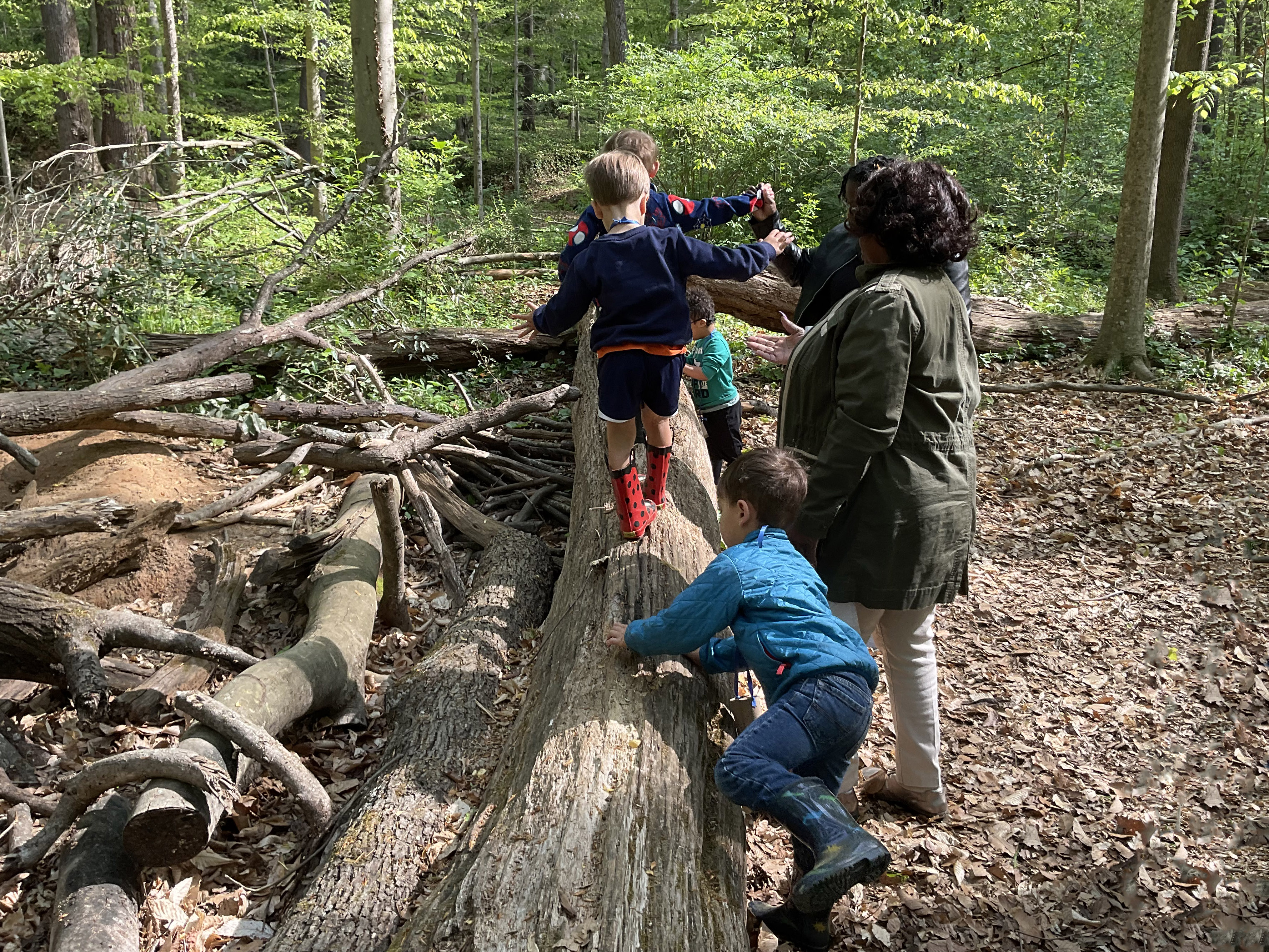
The forest isn’t flat or predictable. There are roots to step over, logs to balance on, uneven ground that asks children to slow down and figure things out.
For some children, that challenge makes a difference quickly.
One teacher shared a moment that stayed with her. She had a student in her class who, when he first arrived at Frazer, needed to use a wheelchair to navigate the forest terrain. With support, he began spending time on the ground—touching, playing, moving in new ways.
Other children stayed close. They made space for him. Included him in what they were doing. “He loved it,” she said. “It made him really happy.”
By the time he finished Pre-K, he was walking in the forest without assistance, playing and exploring with his peers.
Children who are still building strength and coordination begin to take risks they might avoid on a playground. Stepping over roots. Climbing onto logs. Testing what their bodies can do.
Over time, that hesitation starts to fade.
Teachers notice it in quieter ways, too. Children who once kept their distance slowly move closer. A child who used to scream at the sight of a bug now watches, calm and curious.
Teachers learning alongside them
When the nature-based curriculum was first implemented, not every teacher felt comfortable in the forest. There were questions. Uncertainty about what they might encounter. How to lead a lesson outside.
That has shifted over time.
Teachers who have been part of the program for a few years move through the space with more ease. They’ve learned the rhythms of the forest. They know what to watch for, what to avoid, and when to step back and let something unfold.
They’re still learning, too.
Kim Corson, Frazer’s Nature-Based Curriculum Coordinator, continues to build on the program as it grows. She’s currently working toward an advanced certification in environmental education through the Environmental Education Alliance of Georgia.
For her, the focus is simple. Help children understand how the natural world works—and how their actions affect it.
That can start small. Being gentle with a bug. Leaving flowers for pollinators. Picking up trash when they see it.
Over time, those habits begin to stick.
What stays with them
Ask Kim what she hopes children carry with them, and she doesn’t talk about specific lessons or milestones.
She talks about attention. About care.
Slowing down. Looking closely. Not rushing past what’s in front of you.
“There’s a lot of wonder out there that people miss,” she said. “If you know to look for it, you’ll find it.”
For the children at Frazer, that practice starts early.
It looks like watching a slug instead of touching it.
Building a home for something small.
Stopping at the edge of a creek to notice what doesn’t belong.
It’s not something that happens once a year.
It’s something they practice every time they step into the forest.