






A Sense of Purpose: Jonathan Grant at Work
At The Fresh Market, Jonathan Grant begins his workday by reviewing the list of tasks left for him.
On a recent visit, tangerines were on the list.
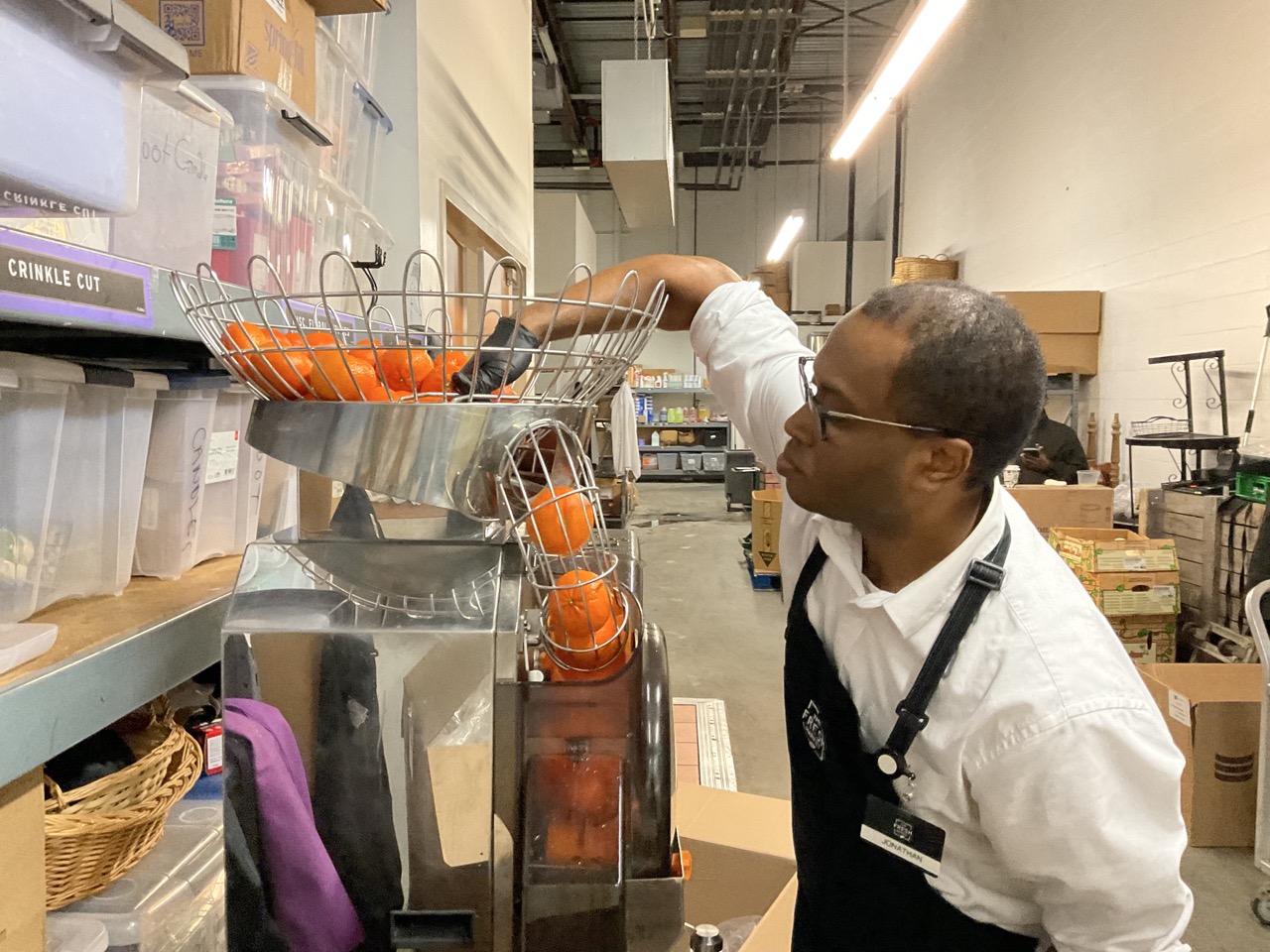
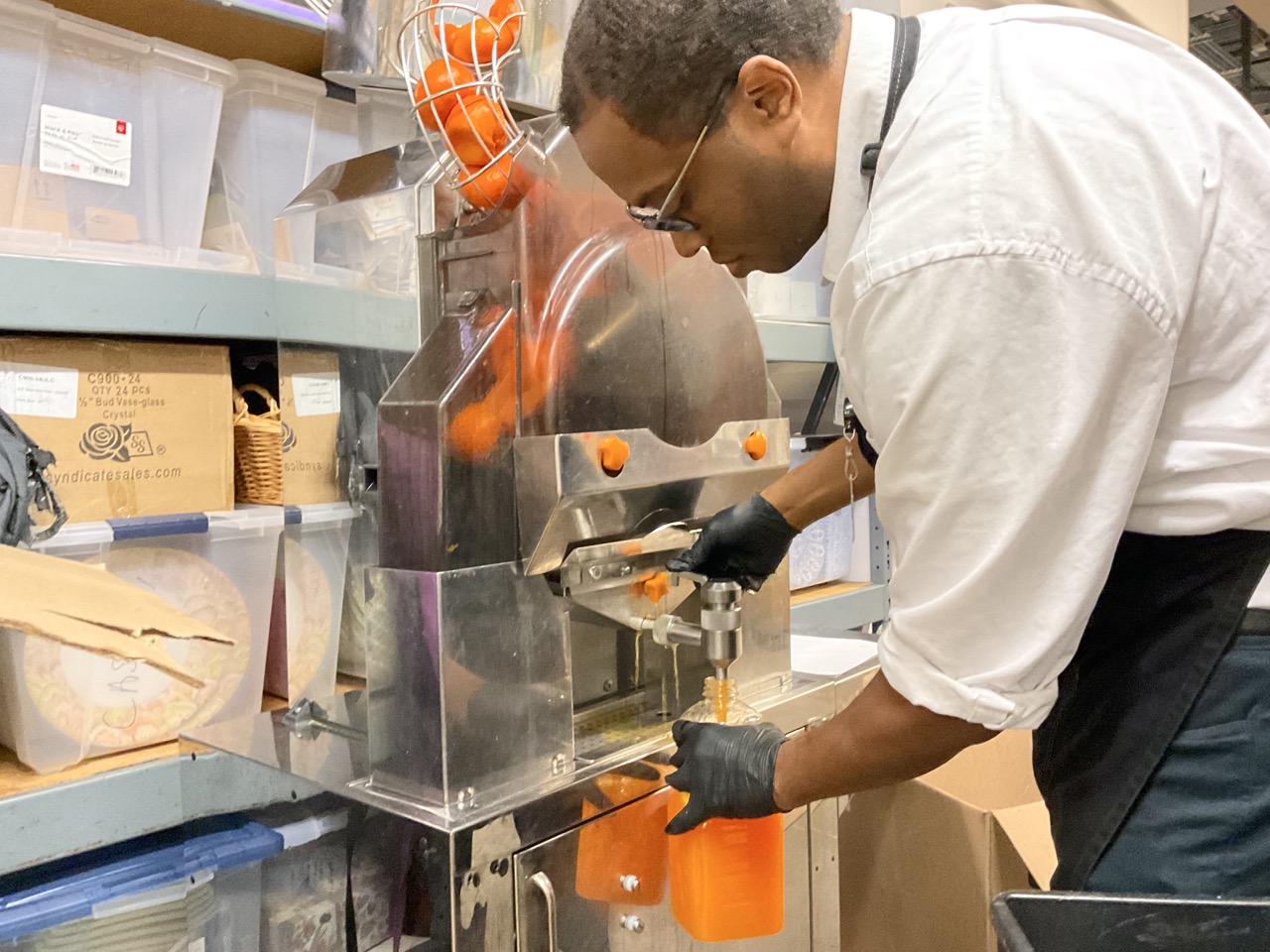
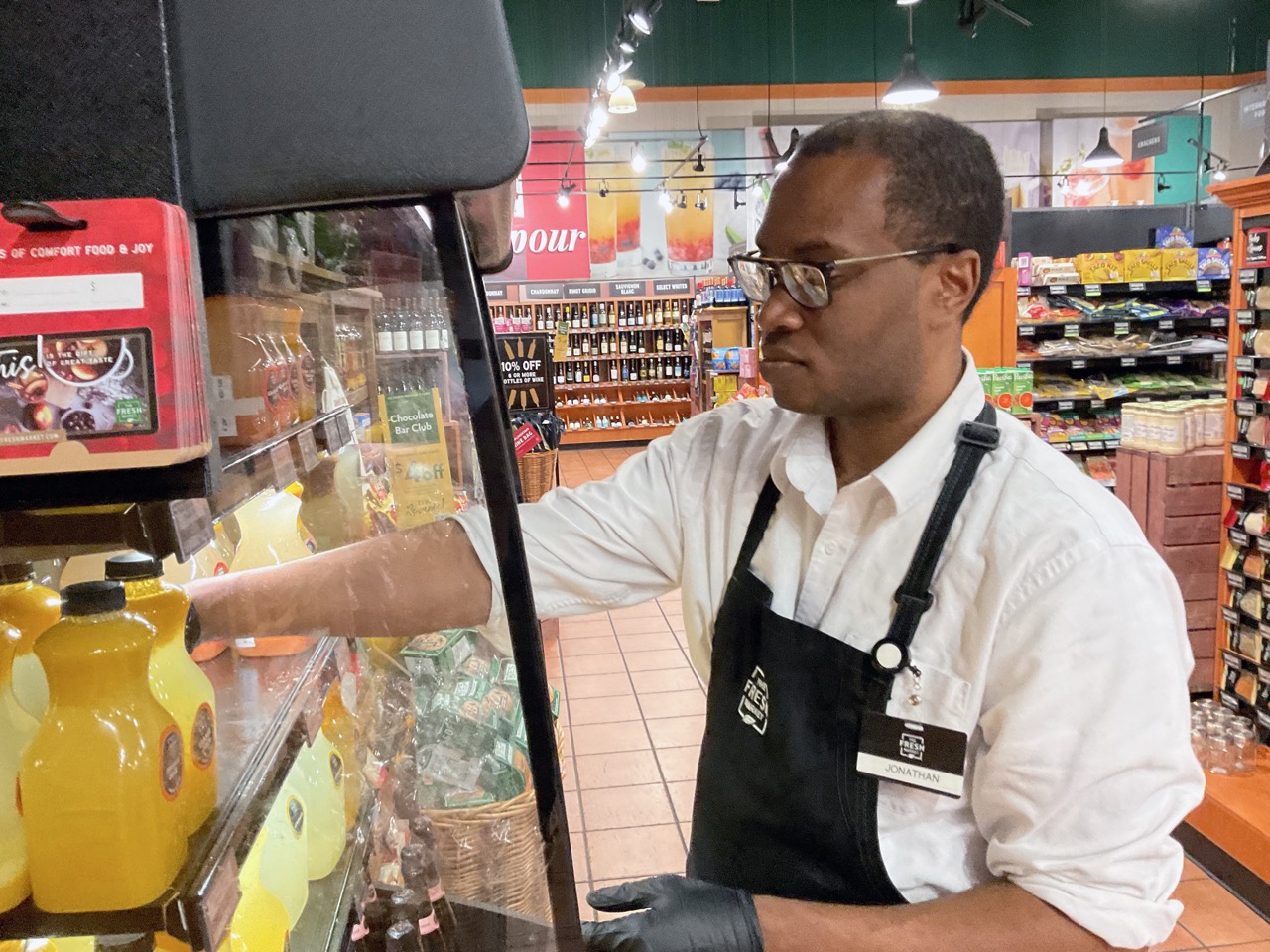
Jonathan washed the fruit and fed it through an industrial juicer, keeping an eye on the peels so they wouldn’t clog the machine. Once the juice was ready, he filled bottles in the sizes specified on his list, printed labels and applied them. Then he stocked the refrigerated juice case, where customers would find the finished product.
Jonathan has worked at Fresh Market for four months. Watching him work, it’s clear that he knows his routine. He is meticulous and thorough, paying attention to each step.
His Produce Manager, Alonzo, sees that in him, too. Jonathan always does what’s asked of him, he said. Then he broke into a broad smile. “I love him!”
Jonathan also works with produce and occasionally assists in the floral department. He’s soft-spoken and prefers working behind the scenes, where he can concentrate on his tasks.
The job suits him. When asked what he likes most about working at Fresh Market, Jonathan didn’t mention the juice or the flowers.
“I like having some financial independence,” he said. “And a sense of purpose each day.”
Finding the right fit
October is National Disability Employment Awareness Month (NDEAM), a time to recognize the contributions of workers with disabilities and the importance of access to employment.
At Frazer Center, our Supported Employment program helps adults with intellectual and developmental disabilities pursue jobs that reflect their interests, abilities, and goals.
That work begins with getting to know the person.
Frazer’s job coaches spend time learning what each individual enjoys, what they’re good at, what kind of work environment they prefer, and what they hope to gain from employment. They also build relationships with businesses that have positions to fill.
The goal is a good match for both the employee and employer.
Four months into his job at Fresh Market, Jonathan works independently. His job coach, Thomas Johnson, who was recently promoted to Lead Job Coach at Frazer, checks in as needed to make sure things are going well for both Jonathan and his employer.
That support can change over time. A job coach might initially help someone learn a new role and become comfortable in the workplace. Later, as with Jonathan, the job coach may step back while remaining available when needed.
Job coaches also help individuals advocate for themselves. That might mean helping someone prepare to ask a question, communicate a concern, or talk with a supervisor about something they need at work. The goal isn’t to speak for the employee, but to support each person in speaking for themselves.
Jonathan’s job at Fresh Market is a good example of what can happen when the fit is right. His employer has a conscientious worker who contributes to the store’s daily operations. Jonathan has a job that fits the way he likes to work, along with a paycheck and a place to put his skills to use.
Georgia’s Employment First commitment
In 2018, Georgia passed the Employment First Act, establishing competitive, integrated employment as the first and preferred option for working-age people with disabilities receiving state-funded services.
In practical terms, Employment First means that people with disabilities should have opportunities to pursue jobs alongside coworkers with and without disabilities, earning wages comparable to others doing similar work.
Jonathan’s workplace is the kind of setting that policy is intended to support.
But eight years after Georgia adopted Employment First, there is still work to do.
Finding a job can be difficult for anyone. For people with intellectual and developmental disabilities, the process may involve additional barriers, including access to transportation, employers willing to consider different abilities and the availability of individualized employment support.
Supported Employment can help people navigate some of those barriers while also giving employers support as employees settle into their roles.
The promise of Employment First depends on whether people can actually access these opportunities.
The importance of continued support
For many Georgians with intellectual and developmental disabilities, Medicaid-funded services are an important part of living and participating in their communities.
Georgia’s Medicaid waiver programs can provide services that include supported employment, helping eligible individuals access assistance that makes working possible.
Yet thousands of Georgians continue to wait for waiver services, and the systems that fund and deliver disability supports face ongoing pressures.
Changes in federal Medicaid policy have introduced additional questions about how services will be funded and administered in the years ahead. As Georgia prepares for a new governor and legislative session, advocates, service providers and families will be watching closely.
We cannot yet say what every policy change will mean for people who rely on these services. We do know that access to employment support matters.
Georgia has made a commitment through Employment First. Following through requires continued attention to the people who want to work and the services that help them do so.
Back at Fresh Market
Jonathan’s workday is made up of familiar tasks: checking his list, preparing fruit, bottling juice, labeling products and making sure the shelves are stocked.
Customers may never meet the person who prepared the juice they take home. But watching Jonathan work, his attention to detail is clear. He makes sure each step is completed with care.
There is satisfaction in a job well done and knowing your work matters. That’s something most of us want from our work.
It should be within reach for people with disabilities, too.